To Be and to See


To Be and to See
To Be and to See" (1999) was a pivotal solo exhibition by Latvian artist Ritums Ivanovs, held at the Riga Gallery. This exhibition introduced the artist's signature linear technique, which blended photorealism with emotional expression in large-scale portraits, focusing on the interaction of light with the face.
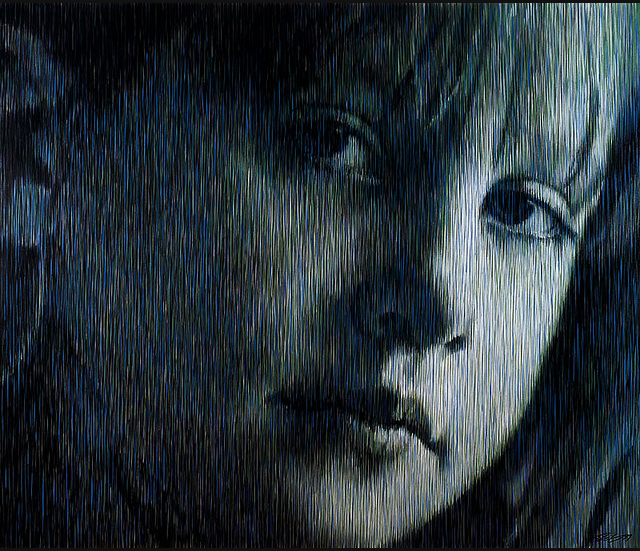
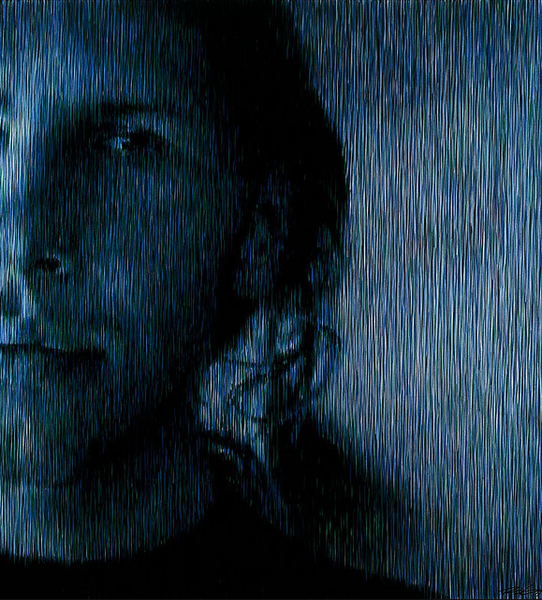
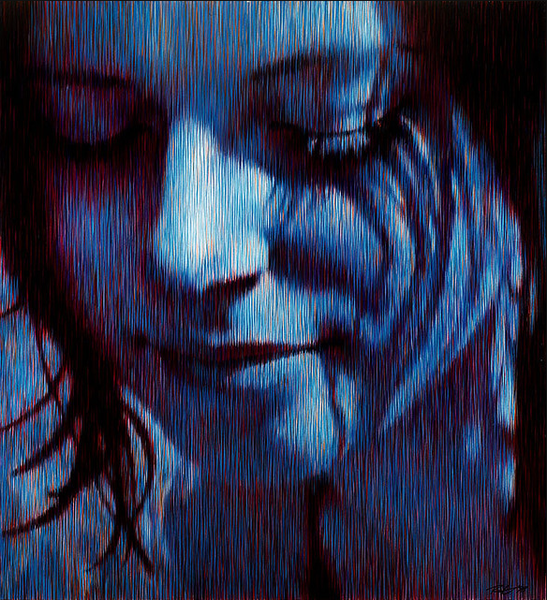
The exhibition explored the interplay between light and human portraits, with the artist focusing on capturing light as a barrier and symbolic element, rather than merely psychological depth. Ivanovs initiated the utilisation of his distinctive "stripes" technique, which employs the application of hand-painted lines to create an image that is only fully perceptible from a distance, while appearing as abstract thin lines at close range. The portraits, frequently constructed from photographs, exhibit a distinctive sense of "coolness and naive cleanliness," thereby evoking a nostalgic or cinematic effect.
This exhibition represented an early point in the artist's career-long exploration of human faces, textures, and the psychological effects of light, a theme that would later be further developed in exhibitions such as "Heroes" (2001) and "Stars. Lights On" (2010).
The artistic oeuvre of Ivanovs produced during this period is significant in establishing his reputation as a notable contemporary Latvian painter, with a particular emphasis on portraiture. In the critical discourse surrounding the exhibition of "To be and to see" at the Riga Gallery, particular emphasis is placed on the capacity of the paintings to evoke a sense of nostalgia, as well as the "plasticity of a moment."
The exhibition explored the interplay between light and human portraits, with the artist focusing on capturing light as a barrier and symbolic element, rather than merely psychological depth. Ivanovs initiated the utilisation of his distinctive "stripes" technique, which employs the application of hand-painted lines to create an image that is only fully perceptible from a distance, while appearing as abstract thin lines at close range. The portraits, frequently constructed from photographs, exhibit a distinctive sense of "coolness and naive cleanliness," thereby evoking a nostalgic or cinematic effect.
This exhibition represented an early point in the artist's career-long exploration of human faces, textures, and the psychological effects of light, a theme that would later be further developed in exhibitions such as "Heroes" (2001) and "Stars. Lights On" (2010).
The artistic oeuvre of Ivanovs produced during this period is significant in establishing his reputation as a notable contemporary Latvian painter, with a particular emphasis on portraiture. In the critical discourse surrounding the exhibition of "To be and to see" at the Riga Gallery, particular emphasis is placed on the capacity of the paintings to evoke a sense of nostalgia, as well as the "plasticity of a moment."